Reporters who would like to cover the awards ceremony, should call the White House Office of Media Affairs at 202-456-6238 by COB, Thursday, July 26, 2007 to request clearance. If you have any further questions, please contact: Kristin Scuderi at 202-456-6124.
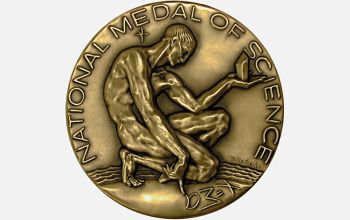
President George W. Bush will award the National Medals of Science and National Medals of Technology, honoring the nation's leading researchers, inventors and innovators at a ceremony at the White House on Friday, July 27, 2007, at 1:40 p.m.
The National Science Foundation (NSF) administers the prestigious award program, which was established by Congress in 1959. It honors individuals for pioneering scientific research in a range of fields, including physical, biological, mathematical, social, behavioral and engineering sciences, that enhances our understanding of the world and leads to innovations and technologies that give the United States its global economic edge. NSF Director Arden L. Bement will attend the White House ceremony.
The 2006 National Medal of Science Laureates:
Hyman Bass - University of Michigan, Ann Arbor, Mich.
For his fundamental contributions to pure mathematics, especially in the creation of algebraic K-theory, his profound influence on mathematics education, and his service to the mathematics research and education communities.
Marvin H. Caruthers - University of Colorado, Boulder, Colo.
For his work in developing robust methods for the chemical synthesis of DNA, which has enabled genetic engineering of new biopharmaceuticals, forensic "DNA fingerprinting," and the human genome project.
Rita R. Colwell - University of Maryland (College Park, MD), Bethesda, Md.
For her in-depth research that has contributed to a greater understanding of the ecology, physiology, and evolution of marine microbes, most notably Vibrio cholerae, the causative agent of pandemic cholera, and which has elucidated critical links between environmental and human health.
Peter B. Dervan - California Institute of Technology, San Marino, Calif.
For his fundamental research contributions at the interface of organic chemistry and biology, and for his influence in education and industrial innovation.
Nina V. Fedoroff - Pennsylvania State University, State College, Penn.
For her pioneering work on plant molecular biology, and for her being the first to clone and characterize maize transposons. She has contributed to education and public policy pertaining to recombinant DNA and genetic modification of plants.
Daniel Kleppner - Massachusetts Institute of Technology (Cambridge, MA) Belmont, Mass.
For his pioneering scientific studies of the interaction of atoms and light including Rydberg atoms, cavity quantum electrodynamics, quantum chaos; for developing techniques that opened the way to Bose Einstein Condensation in a gas; and for lucid explanations of physics to non-specialists and exemplary service to the scientific community.
Robert S. Langer - Massachusetts Institute of Technology (Cambridge, MA) Newton, Mass.
For his revolutionary discoveries in the areas of polymeric controlled release systems and tissue engineering and synthesis of new materials that have led to new medical treatments that have profoundly affected the well being of mankind.
Lubert Stryer - Stanford University, Stanford, Calif.
For his elucidation of the biochemical basis of signal amplification in vision and pioneering the development of high density micro-arrays for genetic analysis. His influential biochemistry textbook has influenced and inspired millions of students.
The 2005 National Medal of Science Laureates:
Jan D. Achenbach - Northwestern University, Evanston, Ill.
For his seminal contributions to engineering research and education in the area of wave propagation in solids and for pioneering the field of quantitative non-destructive evaluation.
Ralph A. Alpher - The Dudley Observatory, Schenectady, NY
For his unprecedented work in the areas of nucleosynthesis, for the prediction that universe expansion leaves behind background radiation, and for providing the model for the Big Bang theory.
Gordon H. Bower - Stanford, Calif.
For his unparalleled contributions to cognitive and mathematical psychology, for his lucid analyses of remembering and reasoning, and for his important service to psychology and American science.
Bradley Efron - Stanford University, Stanford, Calif.
For his contributions to theoretical and applied statistics, especially the bootstrap sampling technique; for his extraordinary geometric insight into nonlinear statistical problems; and for applications in medicine, physics, and astronomy.
Anthony S. Fauci - National Institutes of Health, Washington, D.C.
For pioneering the understanding of the mechanisms whereby the human immune system is regulated, and for his work on dissecting the mechanisms of pathogenesis of human immunodeficiency virus (HIV) that has served as the underpinning for the current strategies for the treatment of HIV disease.
Tobin J. Marks - Northwestern University, Evanston, Ill.
For his pioneering research in the areas of homogeneous and heterogeneous catalysis, organo-f-element chemistry, new electronic and photonic materials, and diverse areas of coordination and solid state chemistry.
Lonnie G. Thompson - Ohio State University, Columbus, Ohio
For his pioneering research in paleoclimatology analyzing isotopic and chemical fingerprints found in tropical ice cores from the world's highest mountain glaciers and for his courage in collecting these disappearing climate archives that has transformed our understanding of the natural and anthropogenic factors influencing climate variability on our planet, past and present.
Torsten N. Wiesel - The Rockefeller University, New York, NY
For providing key insights into the operation of the visual system and for the discovery of the manner in which neural connections in the brain are made during the development and how they are maintained.
The ceremony will be available as a live webcast at www.whitehouse.gov and broadcast via satellite. An archive of the webcast is available for on-demand viewing at http://www.whitehouse.gov/news/releases/2007/07/20070727-9.html